

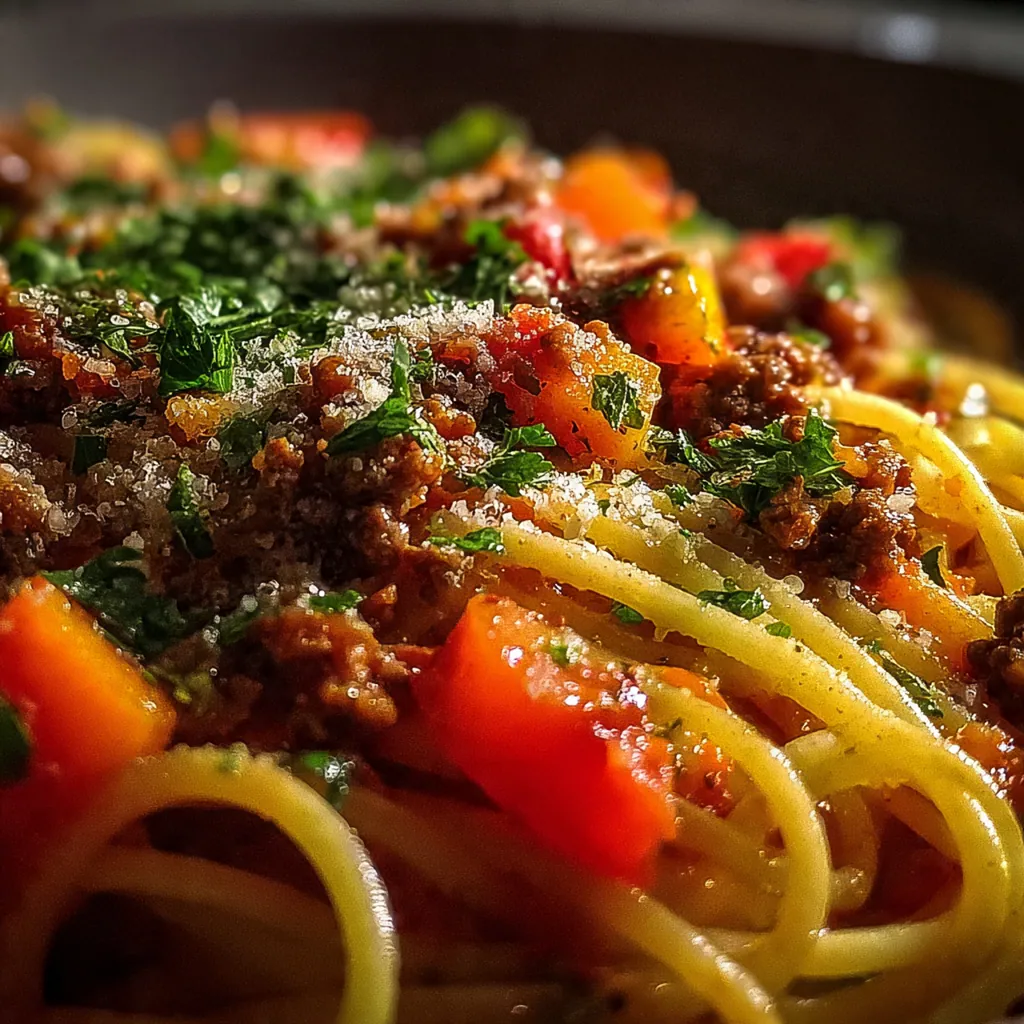
This Classic Spaghetti Bolognese recipe is the kind of deeply satisfying comfort food you’ll want to make again and again. My family’s version comes from time spent in Emilia-Romagna, where the sauce simmers low and slow until it’s rich and velvety. It’s a true Italian staple that builds layers of flavor from humble ingredients. You’ll find the wait for that perfect texture is absolutely worth every single minute.
Why You'll Love This Recipe
- You get a sauce with deep, complex flavors from patient simmering
- It’s a family-friendly meal that tastes even better as leftovers the next day
- You can freeze it for a homemade dinner that’s ready in minutes
- It uses simple, wholesome ingredients from your local grocery store
- It’s the ultimate comfort food that feels special enough for any night
Ingredients You’ll Need
- Olive oil: It’s your cooking base and adds a fruity richness that extra virgin olive oil brings to the soffritto.
- Yellow onion: Finely chopped, it melts into the sauce for a sweet, savory backbone. A good yellow onion feels firm and has dry, papery skin.
- Carrot: It provides a subtle sweetness and balances the tomatoes. Look for carrots that are vibrant and snap when bent.
- Celery: A single stalk gives an earthy, aromatic depth that’s essential to the classic flavor trio.
- Pancetta: This adds a salty, savory punch that makes the sauce taste authentic. Buy it thick-cut and dice it yourself.
- Ground beef (80/20): The fat content is key for a juicy, flavorful meat sauce that doesn’t dry out during the long cook.
- Tomato paste: You’ll cook it until it deepens in color, which concentrates its flavor and removes any raw, tinny taste.
- Dry red wine: Like a Chianti, it deglazes the pan and adds a complex, fruity acidity that you can’t skip.
- Beef broth: It forms the liquid base of your sauce, adding a savory, meaty dimension that water just can’t match.
- Whole milk: This might seem odd, but it tenderizes the meat and gives the sauce a luxurious, creamy richness.
- Freshly grated nutmeg: Just a hint warms up the entire sauce and complements the milk beautifully.
- Dried spaghetti: The classic choice for this sauce, its long shape is perfect for twirling and holding onto the meat.
- Grated Parmesan cheese: The salty, nutty finish that pulls the whole dish together. Freshly grating it yourself makes all the difference.
- Fresh parsley: A bright, herbaceous garnish that adds a pop of color and freshness right at the end.
How to Make It
Heat the Oil and Sweat the Soffritto:
Grab your large, heavy pot and warm the olive oil over medium heat. Add your chopped onion, carrot, celery, and pancetta. You’re looking for the vegetables to soften and turn translucent, and the pancetta to get a little golden, which should take about ten minutes. This builds the flavor foundation.
Brown the Ground Beef:
Crank the heat up to medium-high and add your ground beef. Use your wooden spoon to break it up into small pieces as it cooks. Keep going until there’s absolutely no pink left and the meat has developed some nice browned bits on the bottom of the pot.
Toast the Tomato Paste:
Stir in all of that tomato paste and let it cook for a full minute. You’ll see it darken from a bright red to a deeper brick color, and the aroma will become sweet and rich. This simple step deepens the flavor immensely.
Deglaze with Red Wine:
Pour in your red wine and use your spoon to scrape up every last bit of browned flavor from the bottom of the pot. Let it bubble and simmer until it reduces by about half. This cooks off the alcohol and leaves behind a wonderful fruity complexity.
Simmer the Sauce:
Now add your beef broth, milk, and that little bit of nutmeg. Season it generously with salt and black pepper. Bring it to a gentle bubble, then reduce the heat to the lowest setting. Partially cover it and let it simmer for at least an hour and a half, stirring every so often. This long, slow cook is the magic.
Cook the Spaghetti:
When your sauce is nearly done, get a huge pot of salted water boiling. Cook your spaghetti until it’s just al dente, following the package time. Before you drain it, you must scoop out about a cup of that starchy pasta water. It’s liquid gold for finishing the dish.
Combine Pasta and Sauce:
Drain the spaghetti and add it directly into the pot with your beautiful, thick Bolognese. Toss everything together, adding splashes of that reserved pasta water as you go. The starch in the water helps the sauce cling to each strand perfectly.
Serve and Garnish:
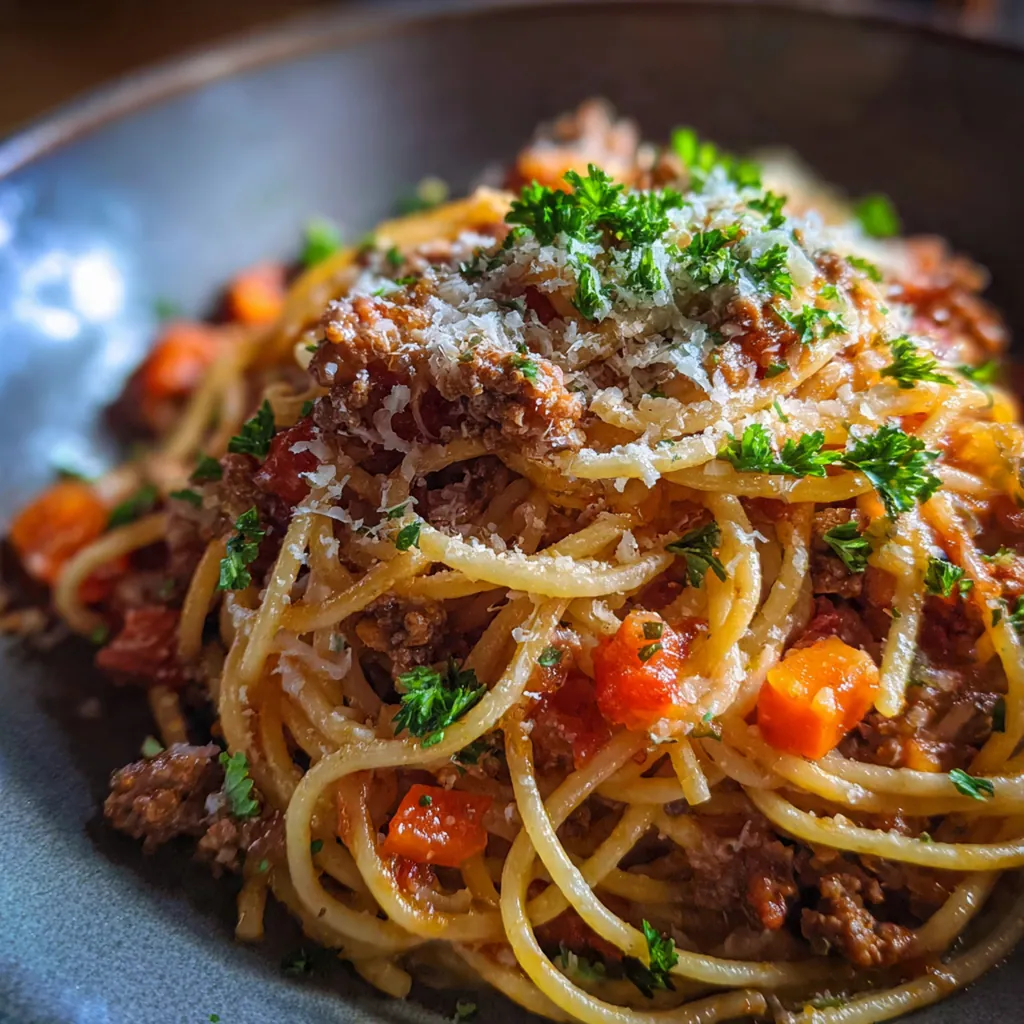
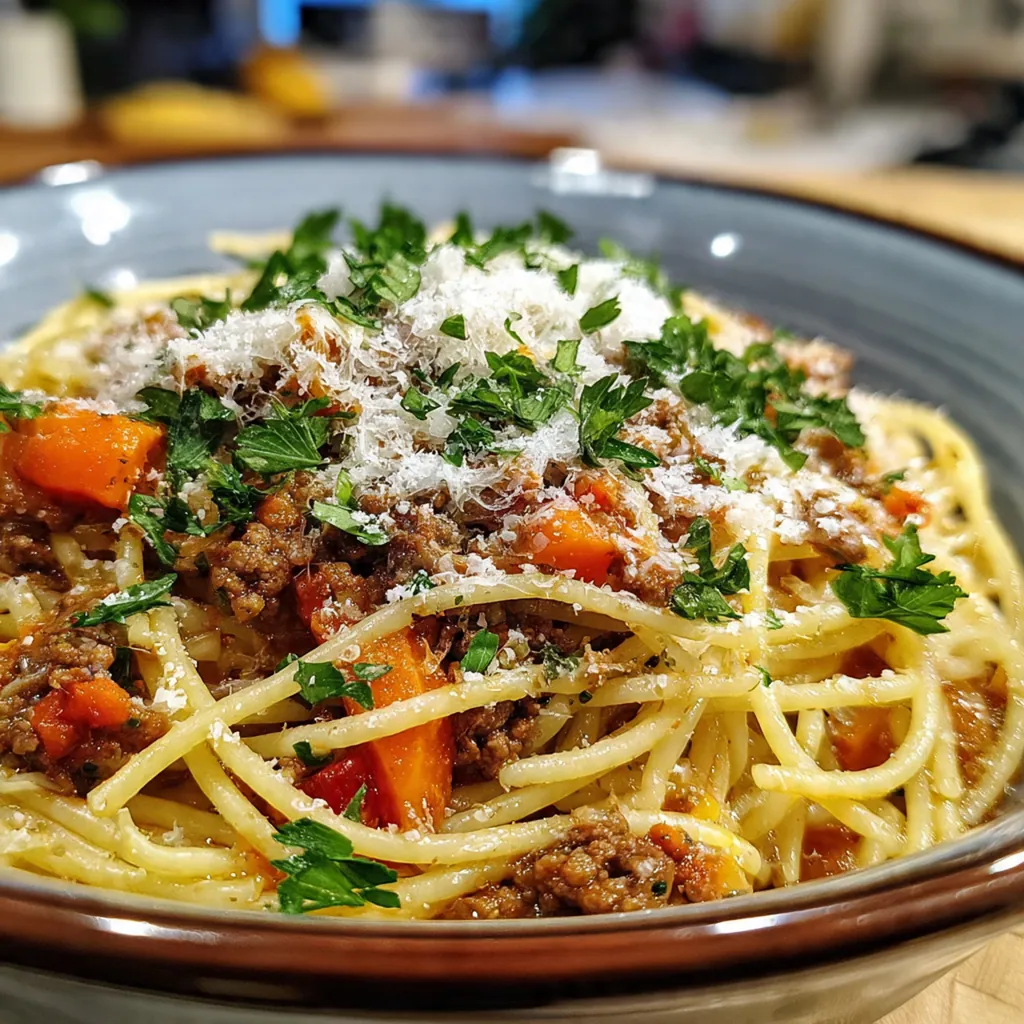
Divide the saucy pasta among warm bowls. Finish each one with a generous shower of freshly grated Parmesan cheese and a sprinkle of chopped parsley. This Spaghetti Bolognese is best enjoyed immediately while everything is hot and fragrant.
You Must Know
- That long simmer is non-negotiable for tender meat and rich flavor
- Always, always reserve a cup of starchy pasta water before draining
- Freshly grate your Parmesan cheese for the best melting and taste
- Cook your sauce and pasta separately, combining them at the very end
- My family fights over the leftovers
Storage Tips
Store any leftover Bolognese sauce separately from the pasta in an airtight container in your fridge, where it’ll stay perfect for up to three days. For longer storage, freeze just the sauce in a freezer-safe container for up to three months – it’s a lifesaver for busy weeks. When you’re ready, gently reheat the thawed sauce in a pot with a splash of broth or water to loosen it up, and cook a fresh batch of spaghetti to serve it with. I find the sauce actually tastes richer after a night in the fridge.
Ingredient Substitutions
If you can’t find pancetta, a few strips of chopped thick-cut bacon work just as well for that smoky saltiness. For the ground beef, a half-and-half mix of beef and pork is incredibly authentic and adds even more depth. Don’t have red wine on hand? You can substitute with an equal amount of beef broth, though you’ll miss that fruity note. If you need it dairy-free, swap the whole milk for an unsweetened oat or almond milk and simply omit the Parmesan cheese at the end. Gluten-free spaghetti noodles are a perfect one-for-one swap if you need to avoid gluten.
Serving Suggestions
I love to serve this Spaghetti Bolognese with a big, simple arugula salad dressed in lemon juice and olive oil to cut through the richness. A few slices of warm, crusty garlic bread are also essential for mopping up every last bit of sauce from your plate. Pour a glass of the same dry red wine you used in the cooking – a Chianti or Sangiovese – to sip alongside for a truly perfect meal. It turns a weeknight dinner into a little celebration.
Cultural Context
This style of meat sauce, or *ragù alla bolognese*, hails specifically from Bologna in Northern Italy, where it’s traditionally served with tagliatelle pasta, not spaghetti. The slow-cooked combination of minced meat, soffritto (onion, carrot, celery), wine, and milk creates a uniquely rich and creamy texture that’s quite different from a fast-cooked tomato sauce. It’s a dish meant to be savored, often simmered for hours on a Sunday afternoon to develop its signature depth. While every family has their own version, the core principle of patience and layering simple ingredients remains the heart of this beloved classic.
Pro Tips
- Use a mix of ground beef and pork for a more authentic flavor
- Don’t rush the simmer – it makes the meat tender and sauce rich
- Grate your own Parmesan cheese from a block for the best results
- If the sauce gets too thick, just loosen it with pasta water or broth
- I never skip the nutmeg, it’s the secret whisper of warmth
Frequently Asked Questions
A dry, medium-bodied red wine like Chianti or Sangiovese is perfect for Spaghetti Bolognese. The wine adds depth and acidity that balances the richness of the meat and tomato paste. Avoid overly sweet or oaky wines, as they can overpower the sauce’s delicate flavors.
Absolutely! In fact, the flavors of Spaghetti Bolognese deepen and improve overnight. Let the sauce cool completely, then store it in an airtight container in the refrigerator for up to 3 days. You can also freeze it for up to 3 months for a fantastic ready-made meal.
If you don’t have pancetta, you can use an equal amount of finely chopped bacon or prosciutto. For a less smoky flavor, a tablespoon of olive oil and a pinch of salt will work, though you’ll miss the unique savory depth that pancetta provides.
The sauce is ready when it has thickened significantly, the oil separates slightly on the surface, and the meat is incredibly tender—about 2 hours of gentle simmering. It shouldn’t be watery; it should coat the back of a spoon richly.
Keep it classic! Serve your Spaghetti Bolognese over al dente pasta with a sprinkle of Parmesan cheese and a simple side salad dressed with olive oil and vinegar. A slice of crusty bread is perfect for mopping up any extra sauce.