

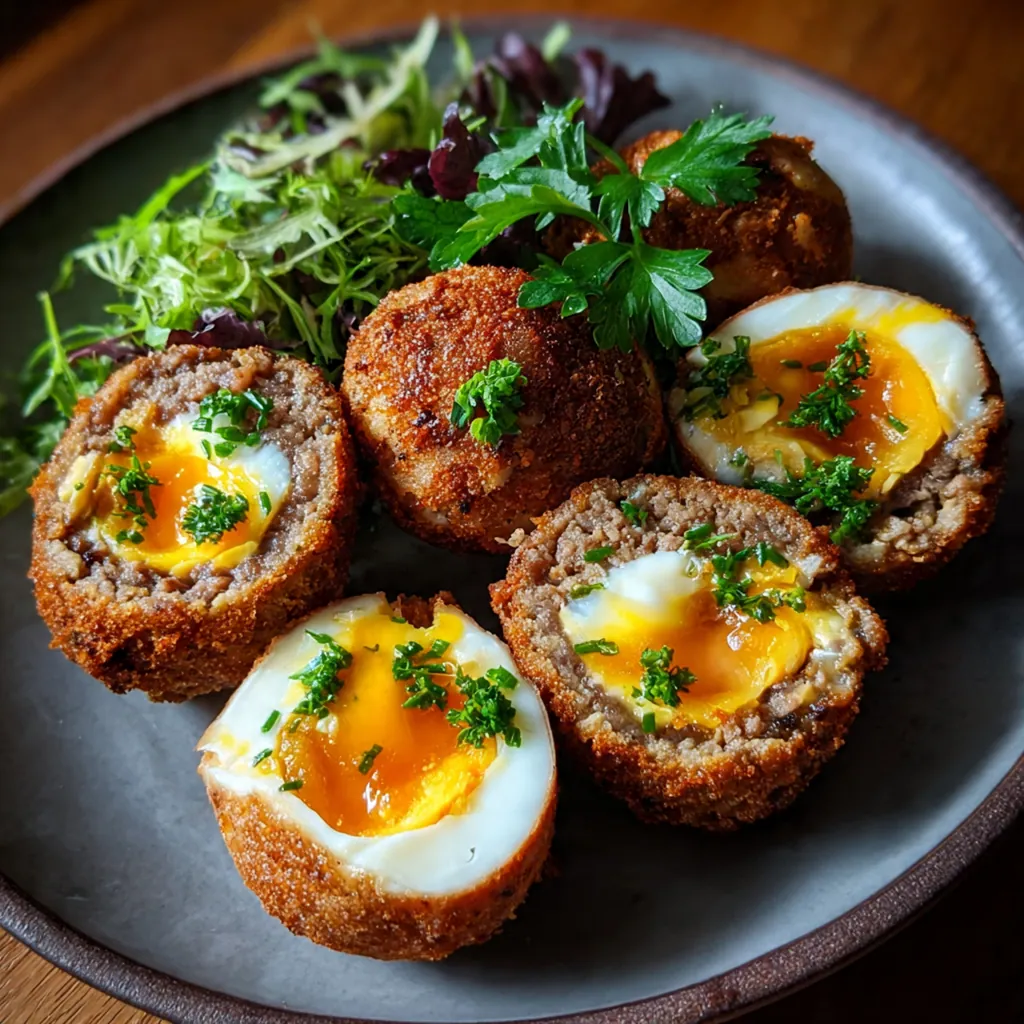
Classic Scotch Eggs are the ultimate British pub snack you can master right in your own kitchen. This traditional recipe wraps a hard-boiled egg in savory sausage meat before coating it in crispy breadcrumbs and frying it to golden perfection. I’ve always loved how these portable treats combine protein and flavor in one satisfying bite, making them perfect for picnics or hearty appetizers. The authentic British flavors come through with simple seasonings like sage and nutmeg that make each Scotch egg truly special.
Why You'll Love This Recipe
- These portable bites pack protein-rich eggs and savory sausage in every single bite
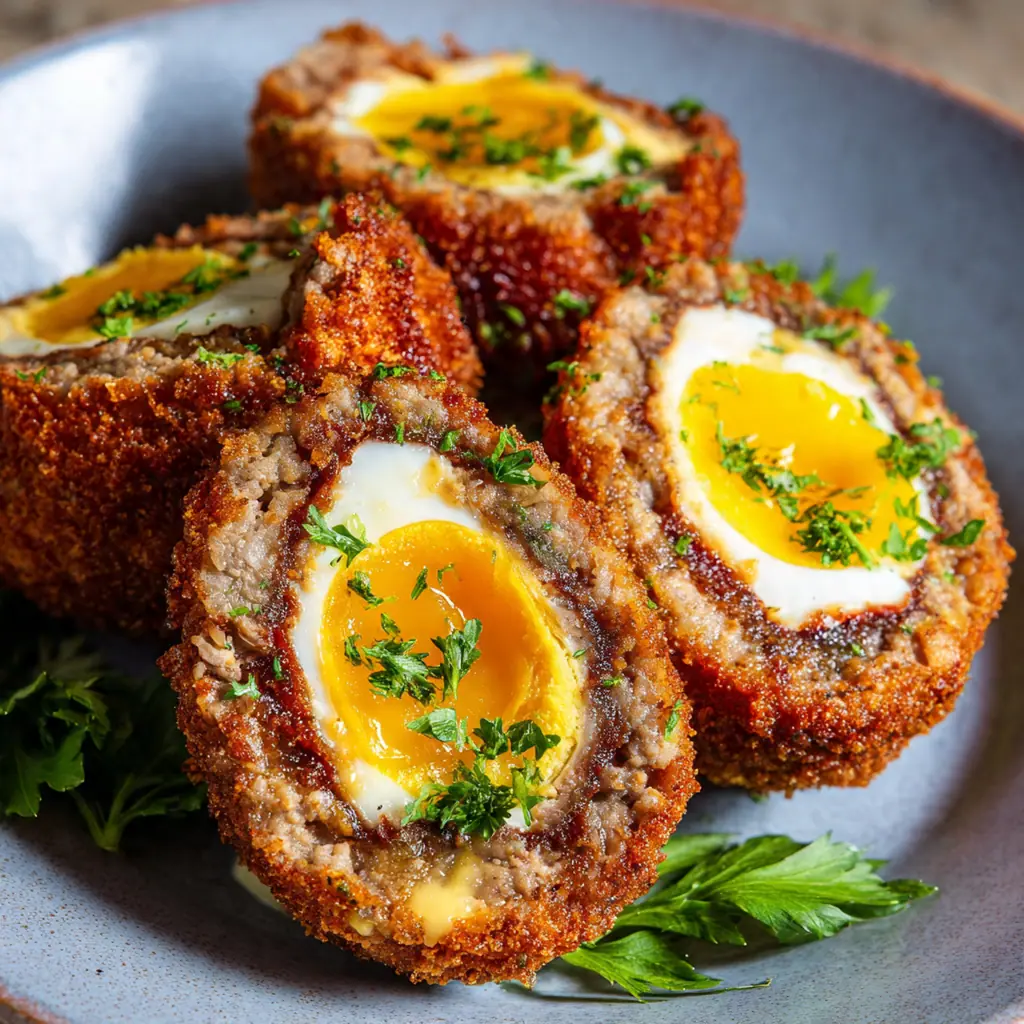
- The crispy exterior gives way to a juicy interior with a perfectly creamy yolk center
- Customizable seasonings let you tweak the flavor profile to match your personal taste prefer…
- Make them ahead for easy picnic snacks or packed lunches that travel beautifully
- I love serving these at casual gatherings – they always disappear fast
Ingredients You’ll Need
- Large eggs: Form the creamy centerpiece that stays perfectly soft when cooked just right Choose farm-fresh eggs with clean, uncracked shells for the best results
- Pork sausage meat: Provides the savory seasoned wrapper that holds everything together Look for fresh sausage with good fat content for juicy, flavorful Scotch eggs
- Dried sage: Adds that classic earthy British pub flavor that defines authentic Scotch eggs Choose fragrant, recently dried leaves for maximum aroma
- Dried thyme: Brings subtle herbal notes that complement the sausage beautifully Opt for organic dried thyme to avoid any bitterness
- Ground nutmeg: Lends warm depth and complexity to the sausage mixture Freshly grated nutmeg delivers far more flavor than pre-ground
- Black pepper: Provides essential heat and sharpness to balance the rich sausage Freshly cracked pepper makes a noticeable difference
- Salt: Enhances all the natural flavors in both the sausage and egg center Kosher salt distributes more evenly than table salt
- All-purpose flour: Creates the essential first coating that helps the egg white adhere to the sausage A fine, unbleached flour works best for this purpose
- Large beaten egg: Acts as the glue that holds the panko breadcrumbs in place Beat it thoroughly until no streaks remain for even coating
- Panko breadcrumbs: Delivers that signature ultra-crispy golden crust Japanese-style panko creates a lighter, crunchier texture than regular breadcrumbs
- Vegetable oil: The cooking medium that transforms these into crispy golden orbs Choose a neutral oil with a high smoke point like canola or peanut
- Dijon mustard: Optional dipping sauce that adds tangy contrast to the rich Scotch eggs A good grainy Dijon provides the perfect sharp counterpoint
- Fresh parsley: Optional garnish that adds color and fresh herbaceous brightness Flat-leaf Italian parsley generally has better flavor than curly varieties
How to Make It
Cook the Eggs Perfectly:
Place your six large eggs in a saucepan and cover them with cold water by about an inch. Bring the water to a rolling boil, then immediately reduce the heat to a gentle simmer. Cook for exactly nine minutes to achieve a firm but not chalky yolk that will be creamy when wrapped in sausage.
Shock and Peel:
Immediately transfer the boiled eggs to a bowl of ice water using a slotted spoon. Let them cool completely for about ten minutes until they’re cold to the touch. Once cooled, carefully peel away the shells under cool running water and set the pristine eggs aside.
Prepare the Sausage Mixture:
In a medium bowl, combine the pork sausage meat with the dried sage, thyme, nutmeg, black pepper, and salt. Use your hands to mix gently until everything is evenly distributed, but avoid overworking the meat as this can make the texture tough. The sausage should be cohesive but still light.
Divide and Shape:
Divide the seasoned sausage mixture into six equal portions. On a piece of plastic wrap, flatten one portion into a thin patty about four to five inches wide, creating a circle large enough to wrap around an egg. Repeat with the remaining portions, keeping them covered to prevent drying.
Set Up Breading Station:
Arrange three shallow dishes for your breading station. Place the all-purpose flour in the first dish, the beaten egg in the second, and the panko breadcrumbs in the third. Having everything ready makes the assembly process smooth and prevents messy fingers.
Wrap the Eggs:
Gently roll one peeled egg in flour, shaking off any excess before placing it in the center of a sausage patty. Carefully wrap the meat around the egg, pressing gently to seal completely and ensure no egg white peeks through. Repeat this process with all six eggs, creating uniform sausage-wrapped spheres.
Coat with Breadcrumbs:
Dip each sausage-wrapped egg first into the beaten egg, letting any excess drip off before rolling thoroughly in panko breadcrumbs. Turn the egg repeatedly until it’s fully coated on all sides with a generous layer of breadcrumbs. Place the coated eggs on a clean plate, ready for frying.
Heat the Oil:
Pour vegetable oil into a deep skillet to reach about one and a half inches deep. Heat the oil over medium heat until it reaches 350°F (175°C), using a thermometer if you have one. The oil should shimmer but not smoke when properly heated.
Fry to Golden Perfection:
Carefully lower two or three Scotch eggs into the hot oil using a slotted spoon, being mindful not to crowd the pan. Fry for five to six minutes, turning occasionally with the spoon until the sausage is cooked through and the coating is evenly golden brown and crispy. The internal temperature of the sausage should reach 160°F for safety.
Drain and Rest:
Transfer the fried Scotch eggs to a wire rack set over a paper towel-lined tray to drain excess oil. Let them rest for two minutes before serving, which allows the interior to set and makes them easier to handle. This resting period also helps the crust stay crispy.
Consider Healthier Options:
For a healthier version, you can bake these at 400°F for twenty to twenty-five minutes, turning them halfway through cooking. Alternatively, cook them in an air fryer at 375°F for twelve to fifteen minutes for a similar crispy result with less oil.
You Must Know
- Use cold, cooked eggs for easier wrapping as the sausage sticks less to the surface
- Seal any cracks in the sausage coating with extra meat to prevent oil from seeping in
- Don’t crowd the frying pan to keep your oil temperature stable for even cooking
- The sausage must reach 160°F internally for food safety use a meat thermometer
- I find letting them rest a minute makes the yolk even creamier inside
Storage Tips
Store cooled Scotch eggs in an airtight container in the refrigerator for up to four days. For best results, reheat them in a 350°F oven for ten to fifteen minutes to restore the crispy coating. Avoid using the microwave, as it makes the breading soggy and unappetizing. I typically enjoy them within two days for optimal texture, though they remain safe and tasty for the full four days.
Ingredient Substitutions
If you can’t find loose pork sausage meat, simply remove the casings from fresh breakfast sausages for the same result. For a lighter option, use turkey or chicken sausage, though you may want to add a bit of olive oil to prevent dryness. Gluten-free eaters can easily swap the all-purpose flour and panko with gluten-free versions that crisp up nearly identically. Fresh herbs can replace dried ones if you have them on hand, using three times the amount since fresh herbs are milder than their dried counterparts.
Serving Suggestions
Serve these Scotch eggs warm or at room temperature with a side of tangy Dijon mustard, sweet chutney, or traditional piccalilli for dipping. They’re absolutely perfect for picnic baskets, packed lunches, or as a hearty appetizer alongside a simple side salad with vinaigrette. Pair them with a pint of ale or crisp cider for an authentic British pub experience at home. I love serving them on a wooden board with pickles and mustard for a casual yet impressive appetizer spread.
Cultural Context
Scotch eggs emerged in British pub culture as the ultimate hearty snack that pairs perfectly with a pint of ale. While their exact origin is debated between London’s Fortnum & Mason and Yorkshire, they’ve become a beloved staple across the United Kingdom. The tradition of wrapping eggs in sausage meat dates back centuries as a practical way to create a portable, protein-packed meal. Today, they remain a cherished comfort food that represents the resourceful and satisfying nature of British cuisine, especially at football matches and in country pubs.
Pro Tips
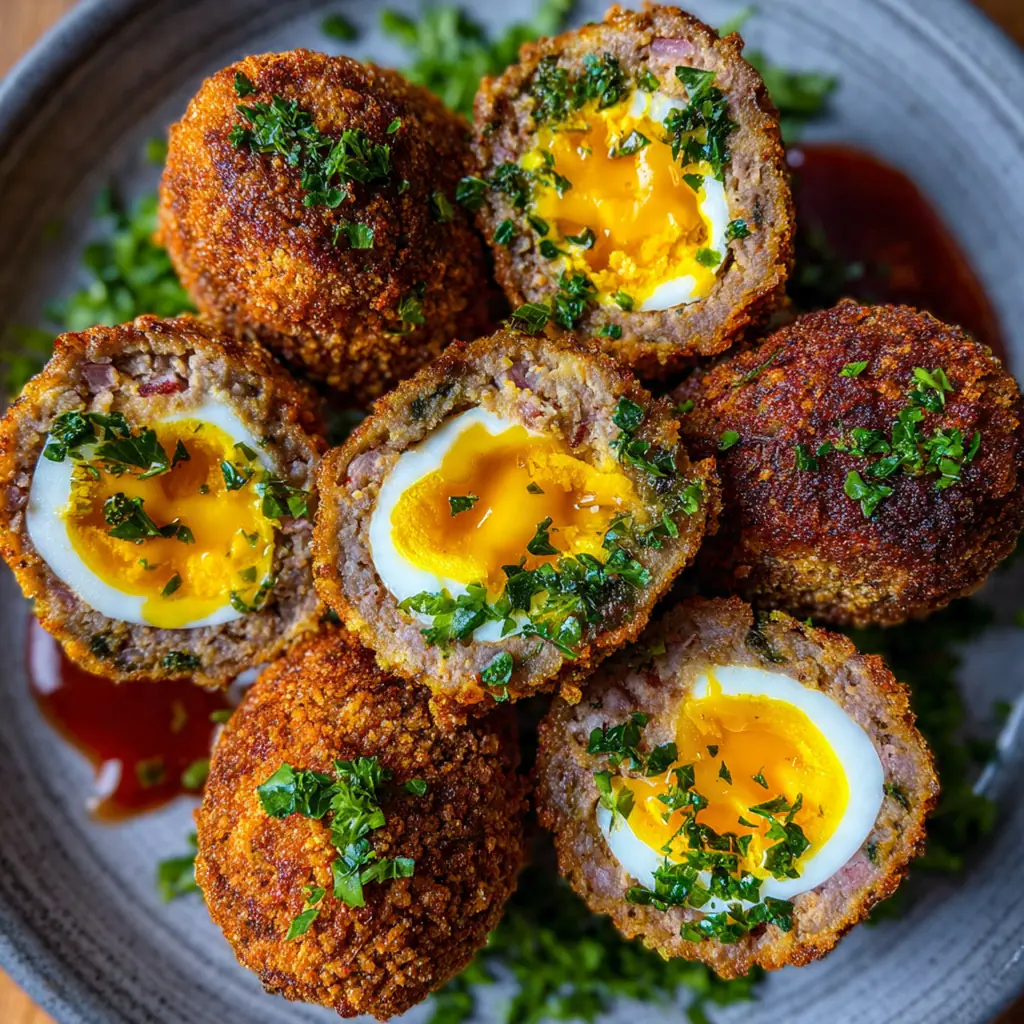
- Seal any gaps in the sausage coating with extra meat to prevent oil from seeping through and…
- Make sure to pat your boiled eggs completely dry with paper towels before wrapping. Any surf…
Frequently Asked Questions
Pork sausage meat is traditional for Scotch eggs, offering a savory base that holds together well during frying. Mild breakfast sausage works perfectly, but you can use spicy Italian or maple sausage for a different flavor profile. Avoid lean turkey sausage, as it may dry out and lacks the fat needed for a juicy result.
Yes, Scotch eggs are excellent for meal prep. You can boil the eggs and prepare the sausage mixture a day in advance, then assemble and fry them fresh for the best texture. Cooked Scotch eggs can be stored in an airtight container in the refrigerator for up to 3 days. Reheat them in an air fryer or oven to maintain crispiness.
While panko breadcrumbs provide an exceptionally light and crispy texture, you can substitute them with regular dry breadcrumbs, crushed cornflakes, or even crushed pork rinds for a low-carb option. If using regular breadcrumbs, they tend to absorb more oil, so you may want to double-coat the eggs for extra crunch.
Scotch eggs are ready when the sausage meat is fully cooked through and the exterior is a deep golden brown. This usually takes about 6-8 minutes of frying at 350°F (175°C). The internal temperature of the sausage should reach 160°F (71°C). If the breadcrumbs are browning too quickly, lower the heat slightly to ensure the meat cooks without burning the coating.
Scotch eggs are traditionally served in British pubs with a side of sharp mustard, chutney, or piccalilli to cut through the richness. They make a fantastic picnic food or party appetizer. For a more substantial meal, serve them over a bed of peppery arugula with a squeeze of lemon, or alongside roasted vegetables.