

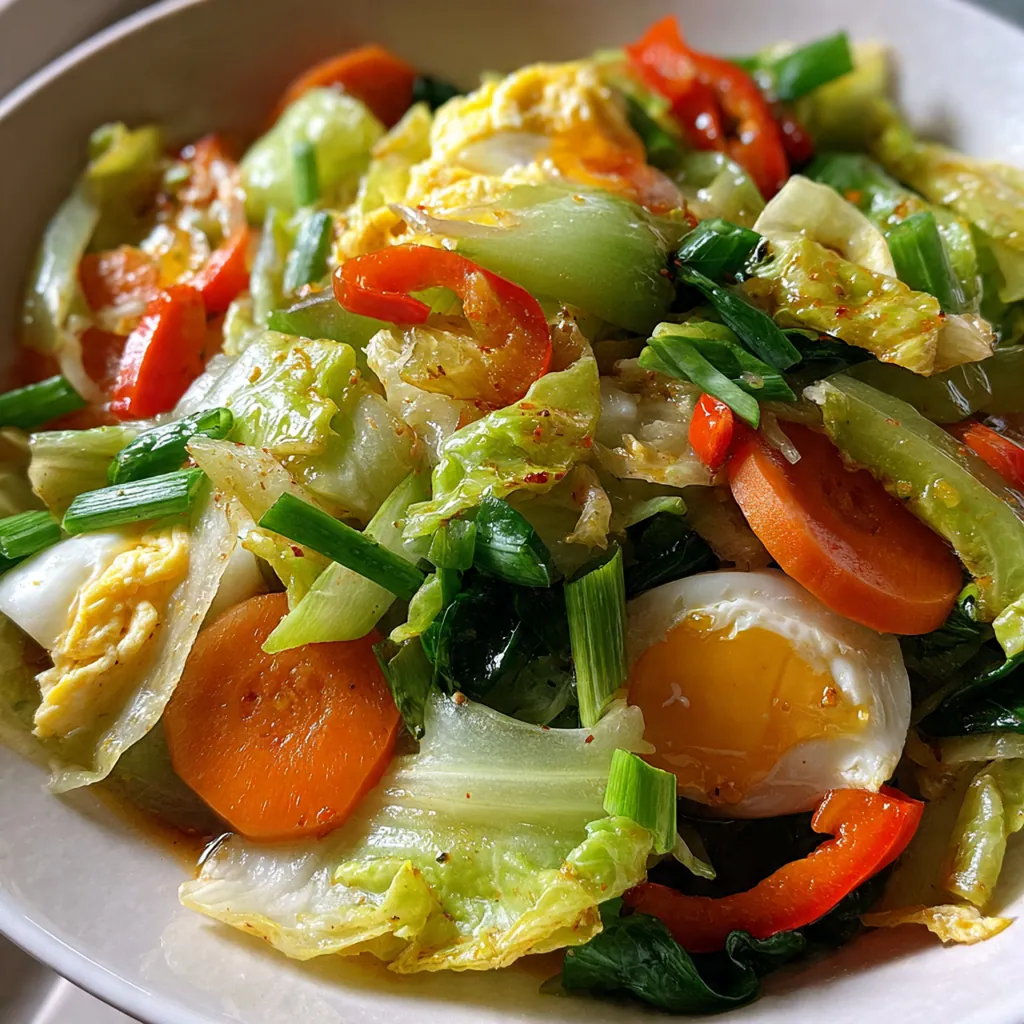
This Chinese cabbage egg stirfry is a classic home-cooked dish that brings comfort to any weeknight with its simplicity. Growing up, it was a regular on our family table because it turns everyday ingredients into something greater. That tender Napa cabbage with fluffy scrambled eggs in a savory sauce is pure Chinese home cooking at its best. You’ll find it’s a dish that’s both incredibly fast to make and deeply satisfying in a way that only a true comfort food can be.
Why You'll Love This Recipe
- Ready on your table in under 30 minutes
- Uses affordable ingredients you might already have at home
- Packed with that savory, umami-rich flavor we all crave
- Light and healthy with plenty of veggies and protein
- It’s my go-to when I need a meal that feels like a hug
Ingredients You’ll Need
- Vegetable oil: Use a neutral oil with a high smoke point for scrambling the eggs, it prevents burning when your wok gets hot.
- Eggs: Lightly beaten eggs create soft, fluffy curds that mix beautifully with the cabbage, fresh is always best.
- Peanut oil or canola oil: These are your main stir-frying oils, they can handle the high heat needed for that classic wok flavor.
- Garlic: Freshly minced garlic is non-negotiable, it forms the aromatic base and becomes golden and fragrant in seconds.
- Fresh ginger: It adds a bright, warming note that cuts through the richness and makes the whole dish sing.
- Chinese cabbage (Napa cabbage): Look for a firm, heavy head with crisp, pale green leaves for the best texture and sweet flavor.
- Soy sauce: This is your primary salt and umami, a good quality brew like light soy sauce makes a world of difference.
- Oyster sauce: It provides a deep, savory sweetness and body to the sauce, vegetarian versions work perfectly too.
- Sesame oil: Just a teaspoon at the end adds an incredible nutty fragrance, use toasted sesame oil for maximum impact.
- Granulated sugar: A tiny bit balances the saltiness and helps the sauce cling to the cabbage and eggs beautifully.
- White pepper: It offers a gentle, earthy heat that’s more complex than black pepper in this context.
- Green onions: Their fresh, sharp bite is the perfect finishing touch, use both the white and green parts.
- Cornstarch: Mixed with water into a slurry, this is your secret for a glossy, restaurant-style sauce that coats everything.
- Water: Combined with cornstarch to create the slurry that thickens your sauce at the very end of cooking.
How to Make It
Mise en Place:
Get all your ingredients chopped, minced, and measured before you even turn on the stove. This includes beating the eggs and mixing the cornstarch slurry. Stir-fries move incredibly fast, so having everything ready is the key to a stress-free cook and perfect results every single time.
Scramble the Eggs First:
Heat your vegetable oil in the wok over medium-high heat and pour in the beaten eggs. Let them set for a moment before gently pushing them around to form large, soft curds. You want to take them out while they’re still slightly underdone because they’ll finish cooking later. Transfer them to a plate so they don’t overcook in the residual heat.
Stir-Fry the Aromatics:
Wipe the wok clean if there’s any residue, then get your peanut oil smoking hot. Toss in the minced garlic and ginger and stir constantly for about 30 seconds. You’ll know it’s ready when the aroma hits you and they turn a light golden color, but be careful not to let them burn.
Cook the Cabbage:
Immediately add all your chopped Napa cabbage to the wok. Use your spatula to toss and stir constantly, letting the high heat wilt the leaves while keeping a slight crunch in the thicker stems. This usually takes about three to four minutes of active cooking.
Create and Add the Sauce:
While the cabbage cooks, quickly mix together the soy sauce, oyster sauce, sesame oil, sugar, and white pepper in a small bowl. Pour this mixture over the wilted cabbage and toss everything so every piece gets coated in that savory, glossy sauce.
Thicken the Sauce:
Push the cabbage to the sides of your wok to create a clear space in the center. Give your cornstarch slurry a quick stir and pour it into that well. Stir it quickly as it will thicken almost instantly, then toss everything together so the sauce evenly blankets the vegetables.
Bring It All Together:
Return the scrambled eggs to the wok, using your spatula to break them into smaller, bite-sized pieces as you fold them in. Gently toss everything for about a minute, just until the eggs are heated through and integrated with the saucy cabbage.
Finish and Serve:
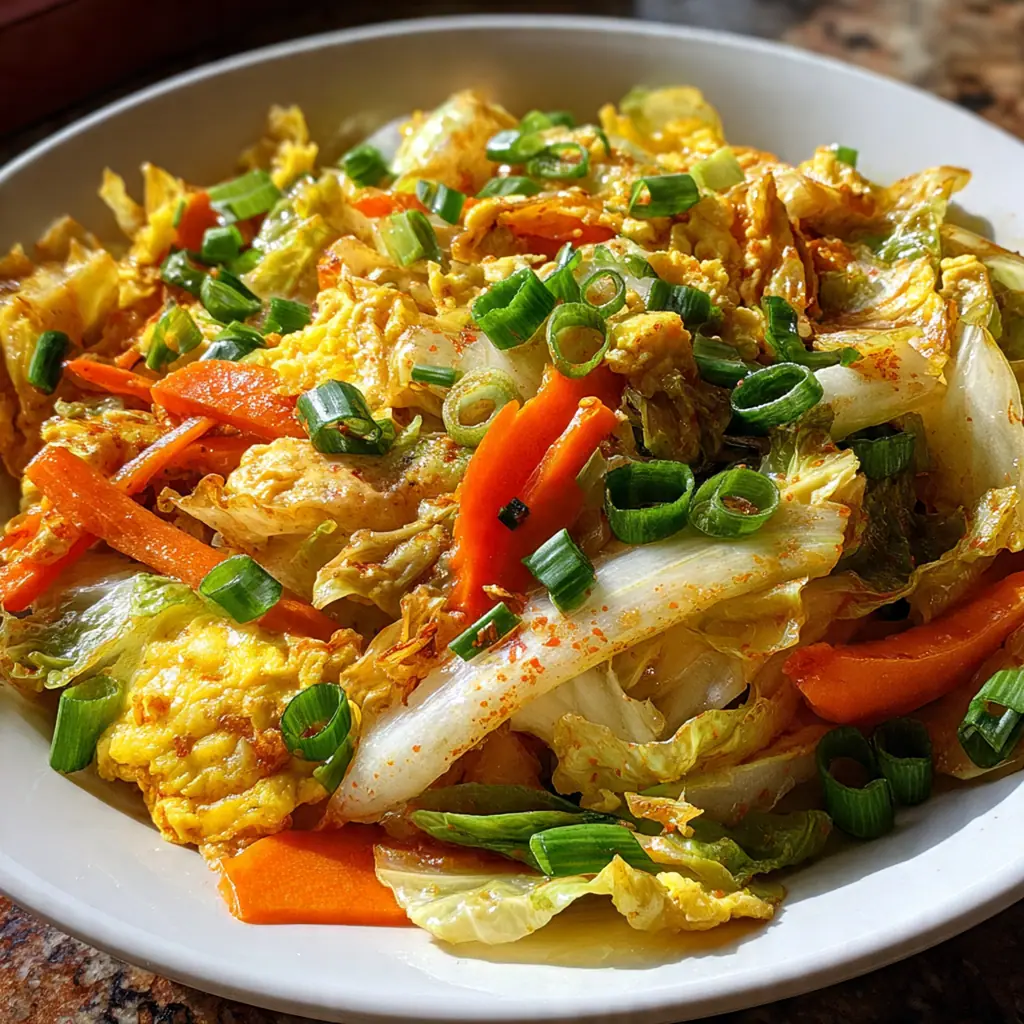
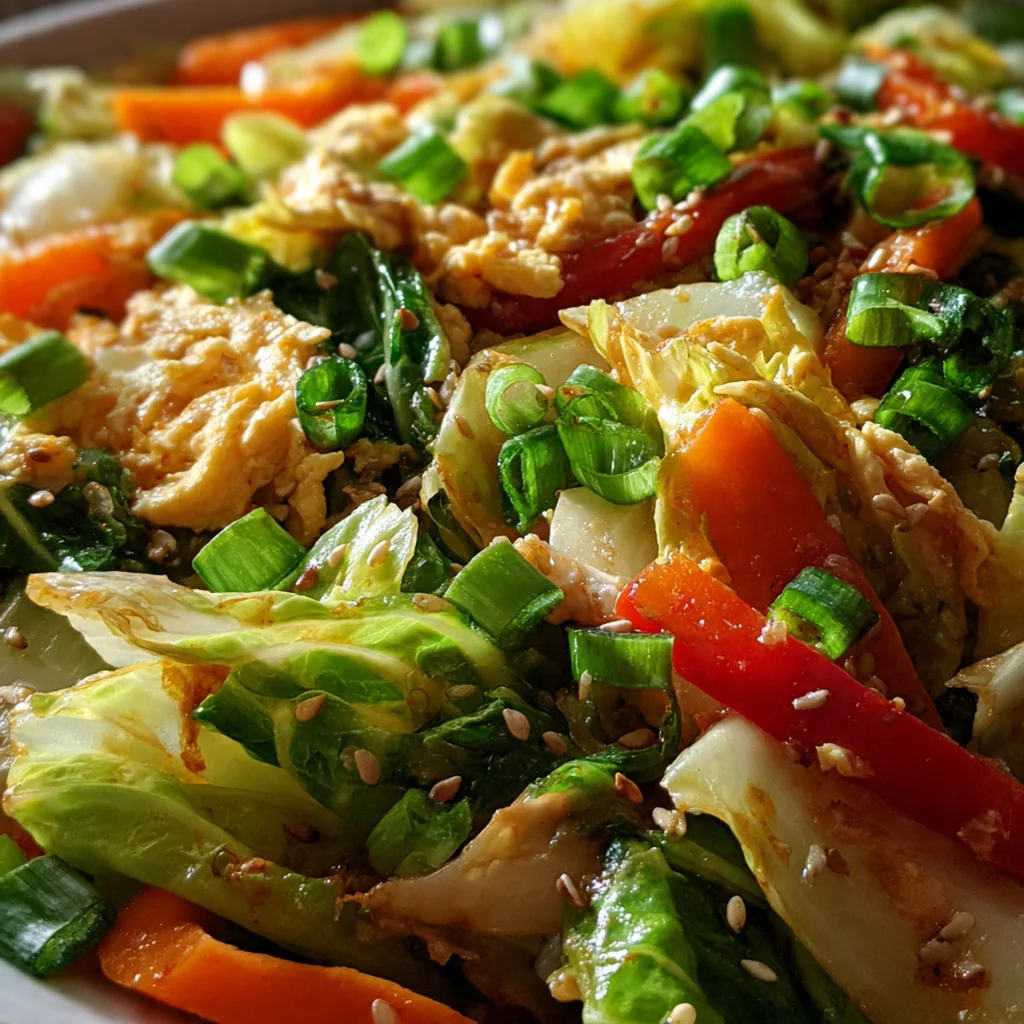
Take the wok off the heat and stir in the sliced green onions. Give it one final toss and transfer to a serving dish immediately. Garnish with toasted sesame seeds if you like, and serve it hot over a big bowl of steaming rice for the ultimate comfort meal.
You Must Know
- High heat is non-negotiable for stir-frying cabbage without sogginess
- Prep every single ingredient before you start cooking
- Pull the eggs early while they’re still soft
- Uniformly chopped cabbage cooks evenly
- This is the recipe I wish I had when I first learned to cook
Storage Tips
Leftovers of this Chinese cabbage egg stirfry keep well in an airtight container in the fridge for up to two days. The texture of the cabbage softens a bit but the flavors still hold up nicely. Reheat it gently in a skillet over medium heat with a tiny splash of water to re-steam and prevent it from drying out or sticking. I don’t recommend freezing it because both the eggs and cabbage will become watery and lose their delightful texture once thawed and reheated.
Ingredient Substitutions
If you can’t find Napa cabbage, regular green cabbage works in a pinch but slice it thinner as it’s denser and takes longer to wilt. Swap the soy sauce for tamari to make this dish gluten-free, and definitely use a vegetarian oyster sauce if you need to avoid shellfish or are cooking for vegetarians. Don’t have white pepper? A small pinch of black pepper will do, though the flavor profile shifts slightly. For the oils, any neutral high-heat oil like avocado or grapeseed can stand in for the peanut or canola oil without issue.
Serving Suggestions
I always serve this stirfry over a big mound of steamed jasmine rice because it soaks up every drop of that incredible sauce. For a more complete meal, pair it with a simple egg drop soup or a quick cucumber salad dressed with rice vinegar for a bright, acidic contrast. It also makes a fantastic side dish alongside other Chinese classics like mapo tofu or sweet and sour pork if you’re feeding a crowd. Sometimes I’ll add a sprinkle of crushed red pepper flakes on top for those who like a little extra heat with their dinner.
Cultural Context
This Chinese cabbage egg stirfry is the definition of ‘home-style’ cooking in China, found in home kitchens far more often than on restaurant menus. It represents a whole category of dishes designed to be quick, economical, and nourishing, using seasonal vegetables and eggs as a reliable protein source. The technique of stir-frying over blazing heat to achieve ‘wok hei’ – that elusive, smoky breath of the wok – is central to its flavor, even in simple recipes like this one. It’s a dish that speaks to practicality and comfort, a staple that countless families rely on for a satisfying meal that comes together in the time it takes to cook a pot of rice.
Pro Tips
- Chop your cabbage stems a bit smaller than the leaves
- Have your sauce mix and cornstarch slurry ready in small bowls
- A carbon steel wok is ideal for achieving that high-heat sear
- Wipe the wok between eggs and cabbage for cleaner flavors
- It’s a recipe that proves simple doesn’t mean boring
Frequently Asked Questions
Napa cabbage, also called Chinese cabbage, is essential for this stirfry. Its long, tender leaves and mild, sweet flavor cook quickly and pair perfectly with the eggs. A standard green cabbage is too tough and would require much longer cooking, altering the dish’s delicate texture.
It’s best enjoyed fresh, but you can store leftovers in an airtight container in the refrigerator for up to 2 days. Reheat gently in a pan over medium-low heat with a splash of water to prevent the eggs from becoming rubbery.
For a vegetarian version, use vegetarian oyster sauce or mushroom stir-fry sauce. Alternatively, you can add an extra tablespoon of soy sauce and a quarter teaspoon of sugar to mimic the savory-sweet depth, though the flavor profile will be slightly different.
The dish is ready when the cabbage is wilted and tender but still has a slight crunch, and the sauce has thickened to coat everything nicely. This usually takes about 5-7 minutes of stir-frying after adding the cabbage to the wok.
Serve it over a bed of steamed jasmine or white rice to soak up the delicious savory sauce. For a complete Chinese meal, pair it with a simple soup like egg drop soup or a side of steamed dumplings.