

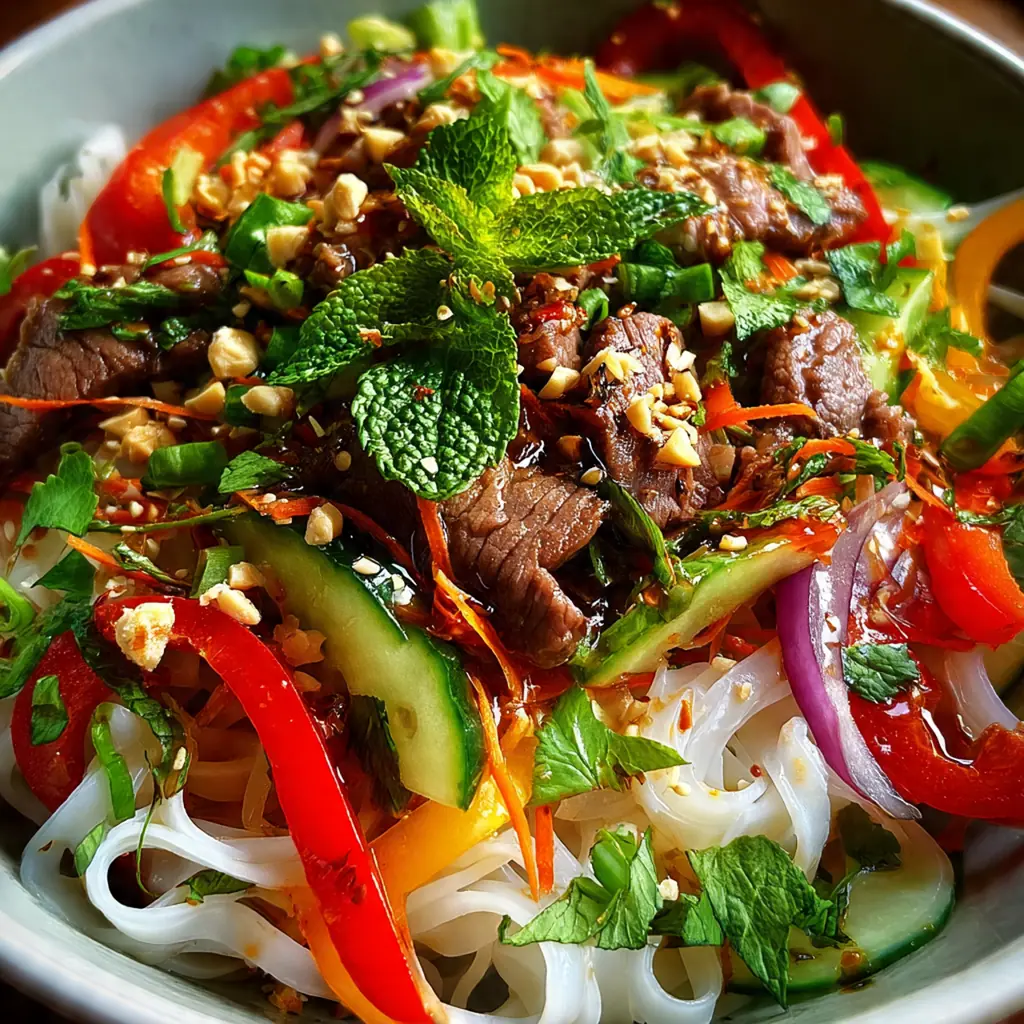
This Asian Noodle Beef Salad is my go-to for busy weeks when I want something fresh but satisfying. The combination of savory marinated steak, cool crunchy veggies, and chewy rice noodles all tied together with a zesty sesame ginger dressing hits every flavor note perfectly. It’s a total crowd-pleaser that brings restaurant-quality vibes right to your kitchen table without any fuss. You’ll love how the warm beef contrasts with the crisp vegetables for a texture that keeps every bite interesting. It’s essentially a vibrant, hearty meal in a bowl that comes together faster than takeout.
Why You'll Love This Recipe
- Perfect balance of warm seared beef with cool crisp vegetables
- Meal prep friendly – components keep well for 3 days when stored separately
- Bold, authentic flavors without needing hard-to-find ingredients
- Naturally gluten-free when using tamari instead of soy sauce
- Customizable with your favorite vegetables and protein choices
- I make this almost every week for easy lunches
Ingredients You’ll Need
- Dried rice vermicelli noodles: These thin, delicate noodles cook quickly and provide a chewy base that soaks up the sesame ginger dressing beautifully. Look for brands that are 100% rice flour for the best texture.
- Flank steak: A lean yet flavorful cut that takes on marinade well and cooks quickly over high heat. Slice against the grain for the most tender results.
- Soy sauce: The salty, umami backbone of both the beef marinade and the dressing. Low sodium gives you better control over the final salt level.
- Oyster sauce: Adds a deep, savory richness and slight sweetness that complements the beef perfectly. It’s a staple in Asian cooking for good reason.
- Sesame oil: A finishing oil packed with nutty aroma. A little goes a long way in both the marinade and dressing.
- Garlic: Fresh minced cloves provide a pungent, aromatic kick that infuses the beef with savory depth.
- Fresh ginger: Grated ginger brings a warm, spicy note that defines the salad’s dressing. Always use fresh for the brightest flavor.
- Vegetable oil: A neutral, high-heat oil perfect for getting that hard sear on the beef without adding extra flavor.
- English cucumber: Crisp and refreshing with minimal seeds. Julienned, it adds a cool crunch that contrasts beautifully with the warm beef.
- Carrots: Either spiralized or shredded, they add sweetness, color, and a satisfying snap to every bite.
- Red bell pepper: Thinly sliced for a burst of sweetness and vibrant color that makes the salad visually stunning.
- Green onions: Sliced on the diagonal, they provide a mild onion bite and fresh green color.
- Fresh cilantro leaves: This herb adds a bright, citrusy note that cuts through the richness of the beef and dressing.
- Fresh mint leaves: Torn leaves add a cooling, aromatic freshness that elevates the entire dish.
- Roasted peanuts: Crushed peanuts offer a salty crunch and nutty finish that is highly recommended.
- Toasted sesame seeds: These tiny seeds add a toasted nutty flavor and extra texture to the garnish.
- Jalapeño: Thinly sliced, it introduces a fresh, spicy kick for those who like heat.
- Lime wedges: A squeeze of fresh lime juice at the end brightens all the flavors and adds a necessary acidic punch.
How to Make It
Marinate the Beef:
In a medium bowl, combine the thinly sliced flank steak with soy sauce, oyster sauce, sesame oil, minced garlic, and grated ginger. Toss well to coat every piece, then let it marinate at room temperature while you prepare the other ingredients, about 15 minutes. This brief marinade tenderizes the meat and infuses it with savory flavor.
Cook and Cool the Noodles:
Bring a large pot of water to a boil. Add the rice vermicelli noodles and cook for 3-4 minutes, stirring occasionally, until just tender but still chewy (al dente). Immediately drain and rinse under cold running water to stop the cooking and remove excess starch. Toss with a tiny drizzle of sesame oil to prevent sticking, then set aside.
Prep the Fresh Vegetables:
Use a mandoline or sharp knife to julienne the cucumber into matchsticks. Peel and spiralize or shred the carrots into thin ribbons. Thinly slice the red bell pepper, green onions, cilantro, and mint. Keep all vegetables crisp and fresh – they should not be wilted.
Sear the Beef to Perfection:
Heat 1 tablespoon of vegetable oil in a large skillet or wok over high heat until shimmering and almost smoking. Add the marinated beef in a single layer, working in batches if needed to avoid overcrowding. Sear for 2-3 minutes per side until beautifully caramelized and cooked through. Remove from heat and let rest for 2 minutes to keep the juices inside.
Whisk the Sesame Ginger Dressing:
In a large mixing bowl, whisk together the dressing: 2 tablespoons soy sauce, 1 tablespoon rice vinegar, 1 tablespoon sesame oil, 1 teaspoon honey, and the remaining 1 tablespoon grated ginger. Taste and adjust seasoning – it should be tangy, salty, and slightly sweet. This dressing is the liquid gold that ties everything together.
Toss the Noodles with Dressing:
Add the cooled rice noodles to the large bowl with the dressing. Toss gently with tongs to coat every strand. Making sure the noodles are fully coated ensures every bite is flavorful, and cooling them first prevents them from becoming mushy.
Combine the Salad Ingredients:
Add all the prepared vegetables: cucumber, carrots, bell pepper, green onions, cilantro, and mint. Toss again until everything is evenly distributed. The crisp veggies should mingle freely with the dressed noodles.
Assemble and Serve:
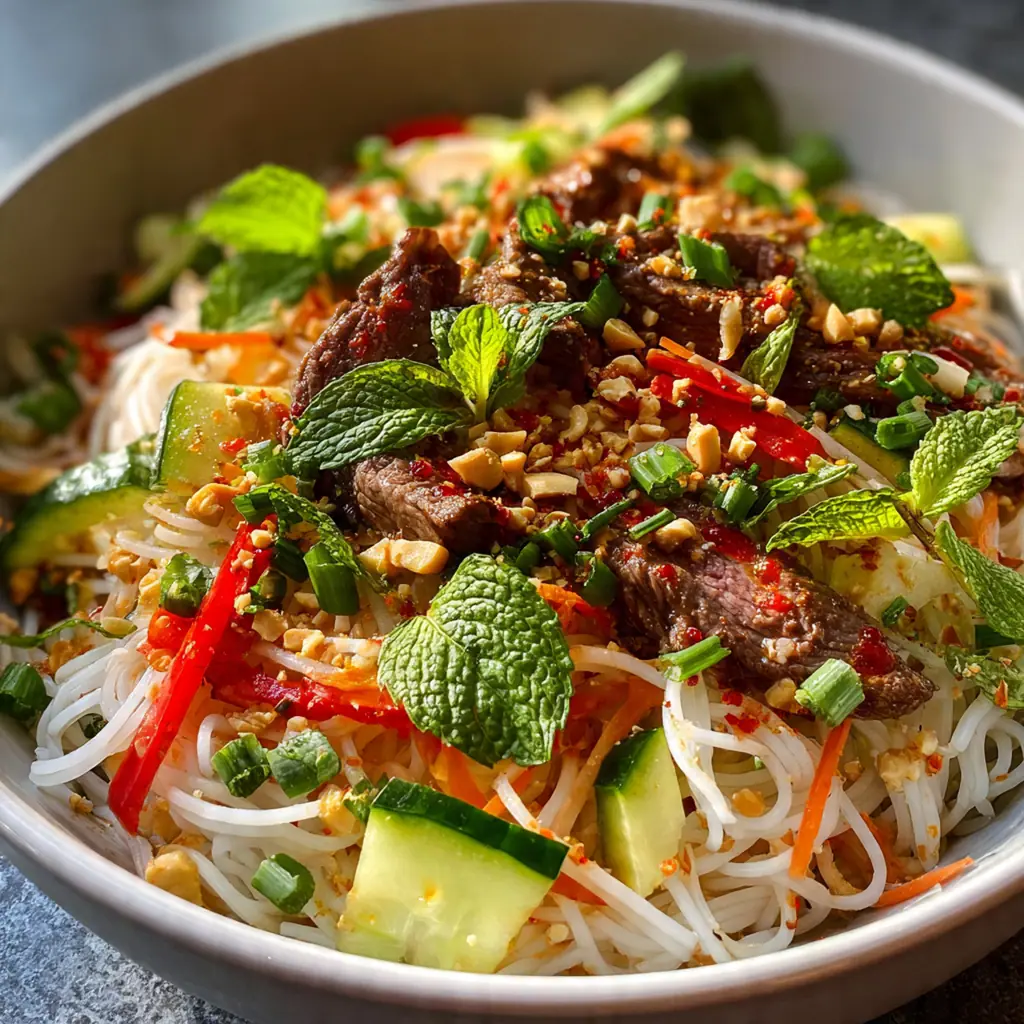
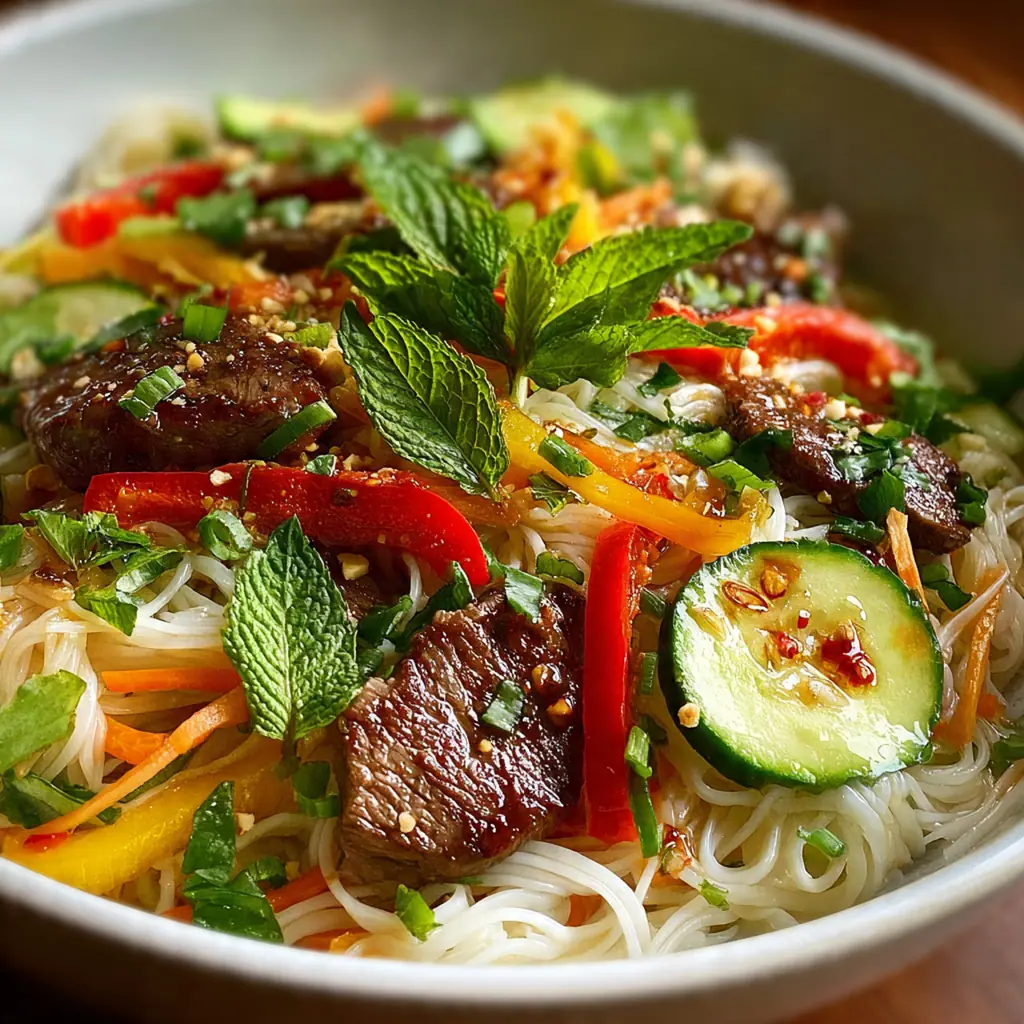
Divide the dressed noodles and vegetables among four bowls. Top each with the warm seared beef, making sure to include any flavorful juices from the resting plate. The contrast of warm meat against cool noodles is what makes this salad so special.
Garnish and Enjoy:
Garnish generously with crushed peanuts, toasted sesame seeds, and fresh cilantro leaves. Add jalapeño slices if you want a spicy kick. Serve immediately with lime wedges on the side for squeezing over the top. Enjoy while the beef is still warm and the vegetables are crisp.
You Must Know
- Slice the beef while partially frozen for cleaner, thinner cuts
- Don’t skip the cold rinse for the noodles – it stops cooking and maintains perfect texture
- Cook beef in batches if your skillet is small to get a proper sear rather than steam
- I always keep extra dressing in the fridge for quick future meals
Storage Tips
Store components separately for best results when meal prepping this Asian Noodle Beef Salad. Keep dressed noodles and vegetables in an airtight container in the fridge for up to 3 days, and store the cooked beef separately. When you’re ready to eat, reheat the beef gently in a skillet or microwave before adding it to the cold noodles. If you prefer storing everything fully assembled, consume it within 24 hours as the vegetables will start to soften and lose their crunch. I don’t recommend freezing this dish as the vegetables will become mushy upon thawing.
Ingredient Substitutions
You can easily swap the flank steak for skirt steak or even thinly sliced chicken breast if you prefer, just adjust cooking times accordingly. If you don’t have English cucumbers, regular cucumbers work fine but peel them and remove the seeds to prevent excess water. For a vegetarian version, replace the beef with crispy tofu or chickpeas and use tamari instead of soy sauce to keep it gluten-free. The vegetables are highly adaptable – try adding shredded cabbage, edamame, or snap peas based on what you have on hand.
Serving Suggestions
This Asian Noodle Beef Salad is a complete meal on its own, but I love serving it with extra lime wedges and a side of chili crisp for those who want more heat. For a heartier feast, pair it with simple miso soup or edamame sprinkled with sea salt. It makes an incredible lunch box meal – just pack the beef separately and assemble at eating time to keep the veggies crisp. For a party, serve it as a large communal salad with extra garnishes on the side so guests can customize their bowls.
Cultural Context
This dish represents the best of modern Asian fusion cooking, blending traditional Vietnamese and Thai noodle salad concepts with a satisfying Western-style steak component. The sesame ginger dressing echoes classic Asian flavor profiles found throughout China, Japan, and Korea, where the balance of salty, sweet, and umami is sacred. While this isn’t a traditional dish passed down through generations, it captures the spirit of how Asian cuisine has evolved globally – using accessible ingredients to create vibrant, fresh meals that fit our busy lifestyles. It’s the kind of cooking that respects tradition but isn’t bound by it, perfect for home cooks who want bold flavors without complexity.
Pro Tips
- Freeze your beef for 20 minutes before slicing to get paper-thin, uniform pieces
- Use a mandoline for perfectly even vegetable ribbons – it makes the salad look restaurant-qu…
- Double the dressing recipe and keep extra in the fridge for future noodle salads or quick ma…
- I always let the beef rest on a wire rack instead of a plate to keep the bottom from steaming
- The salad tastes even better after sitting for 10 minutes, letting the flavors meld
Frequently Asked Questions
Rice vermicelli noodles are ideal as listed in the ingredients because they stay light and absorb the sesame ginger dressing without getting soggy. You can also substitute with soba noodles or rice noodles for a similar texture. Just be sure to rinse them in cold water after boiling to stop the cooking process.
Yes, this salad is excellent for meal prep. Store the beef, noodles, and vegetables in an airtight container for up to 3 days. Keep the dressing separate until you are ready to serve to maintain the crunchiness of the cucumbers and peppers. Toss everything together right before eating.
If you don’t have flank steak, you can use sirloin, skirt steak, or even thinly sliced chicken breast as a lean alternative. For a vegetarian version, swap the beef for crispy tofu or tempeh marinated in the soy sauce and ginger mixture for a similar umami flavor profile.
Cook the thinly sliced flank steak over high heat for just 2 to 3 minutes until it is browned on the edges but still pink in the center. Avoid overcooking to keep the meat tender. The residual heat will finish cooking the beef after you remove it from the pan.
This Asian Fusion dish is substantial enough to be a standalone main course. However, you can serve it with a side of hot and sour soup or spring rolls for a complete meal. It also pairs well with a light white wine like Riesling or a crisp lager beer.